Showing posts with label antioxidants. Show all posts

Friday, July 26, 2024

The Health Benefits and Historical Significance of Blueberries

Blueberries, part of the Ericaceae family and the Vaccinium genus, are indigenous to North America. The Vaccinium genus includes many species with edible fruits, such as bilberry (V. myrtillus), cranberry (V. macrocarpon), lingonberry (V. oxycoccus), and huckleberry (V. ovatum and V. vaccillans), making blueberries a highly valued fruit.

Native Americans not only enjoyed fresh blueberries but also dried them for use with other foods. They believed in the medicinal properties of blueberry roots and leaves. Blueberry leaf tea was thought to purify the blood, and blueberry juice was used to treat coughs.

Modern research is beginning to corroborate these early insights into the health benefits of blueberries. Studies have shown that blueberry leaves contain higher phenolic and antioxidant levels than the fruit tissues. Laboratory studies have demonstrated that dried blueberry extracts with high antioxidant content can reverse signs of aging. Other research has indicated that specific wild blueberry extracts may possess anti-adhesion and chemopreventive properties, which could help prevent certain diseases.

Blueberries are increasingly recognized as a functional fruit that can improve health and quality of life. Their high antioxidant content, particularly in the leaves, contributes to their potential in combating aging and various diseases. Regular consumption of blueberries has been linked to numerous health benefits, including improved cognitive function, reduced risk of heart disease, and enhanced gut health. The high fiber content in blueberries aids digestion, while their anti-inflammatory properties can help reduce the risk of chronic illnesses. As science continues to explore and validate these benefits, blueberries are emerging as a powerful tool in promoting overall health and well-being.
The Health Benefits and Historical Significance of Blueberries
Sunday, January 28, 2024

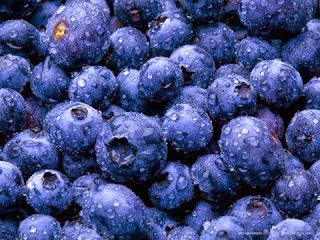
Blueberries: Antioxidant-rich Cancer Fighters

The consumption of blueberries has been associated with a plethora of health benefits, with both lowbush and highbush varieties containing a rich array of advantageous compounds such as anthocyanins, proanthocyanidins, and flavonols.

Antioxidants play a pivotal role in maintaining human health and preserving youthfulness by counteracting the detrimental effects of "free radicals" that the body produces with age, causing damage to cells and DNA. Blueberries, renowned for their vibrant blue hue, owe this characteristic to the presence of antioxidants known as "Anthocyanins," derived from the Greek words for "plant" and "blue."

Recent chemical analyses conducted by the Agricultural Research Service in the US have brought forth intriguing revelations. Blueberries, along with strawberries and raspberries, are found to contain substances that exhibit remarkable inhibitory effects on the growth of cervical and breast cancer cells. This groundbreaking discovery adds to the growing body of scientific literature supporting the positive health impacts of blueberries.

Moreover, blueberries are not just a source of anthocyanins; they also harbor resveratrol, recognized as another potential anti-cancer agent. A study published in the Journal of Agriculture and Food Chemistry on May 4, 2005, shed light on a beneficial compound called pterostilbene found in blueberries. Pterostilbene showcased superior lipid-lowering abilities compared to both resveratrol and the prescription drug Ciprofibrate. Operating at a cellular level akin to metabolism and fats in the bloodstream, pterostilbene contributes to preventing the deposition of plaque.

Beyond their substantial antioxidant content, blueberries boast an array of essential minerals. This nutritional profile makes them not only a flavorful addition to one's diet but also a practical solution for digestive issues. The presence of minerals like sodium and copper further enhances the appeal of blueberries as a suitable choice for individuals dealing with digestive problems.

In essence, the remarkable health benefits of blueberries extend beyond their delicious taste, positioning them as a valuable addition to a wholesome and health-conscious lifestyle.
Blueberries: Antioxidant-rich Cancer Fighters

Tuesday, August 30, 2022

Antioxidant and bioactive compounds in cranberries

Cranberries grow on vines in freshwater bogs, mostly in the northern United States and southern Canada. They're related to blueberries and wintergreen.

Cranberry is abundant in nutritional components and many bioactive compounds that have antioxidant properties. Antioxidants are compounds that prevent cell damage by countering free reactions in the body.

Both American (Vaccinium macrocarpon) and European (Vaccinium oxycoccus) cranberry species are rich in polyphenols such as phenolic acids, anthocyanins and flavonoids, and is one of the few fruits that is high in proanthocyanidins, which is linked to many health benefits.

Since the seventeenth century, cranberries have been used for an assortment of medicinal purposes: stomach ailments, liver problems and blood disorders.

Cranberries contain a variety of anthocyanins, which are a sub-group of flavonoids, with reports in the literature suggesting flavonoids are powerful antioxidants, protecting the body from oxidative stress.

Anthocyanins were localized in the skin. Proanthocyanins were higher in the skin than in the flesh, with the exception of procyanidin A-2 dimer which was concentrated in the flesh.

Anthocyanins indeed are key antioxidants in cranberries but in some cases flavonoids and proanthocyanidins (PACs) are stronger antioxidants than anthocyanins and ascorbic acid contributes very little to antioxidants content and activity. Proanthocyanidins, the most abundant flavonoids extracted from red cranberry fruits, have been reported to possess antimicrobial, antiadhesion, antioxidant, and anti-inflammatory properties.

Proanthocyanidins may be potential therapeutic agents for the prevention and management of periodontitis, an inflammatory disease of bacterial origin affecting tooth-supporting tissues.

Antioxidants found in cranberries are of special importance and contribute greatly to the wellbeing of the body. PACs inhibit the fimbrial adhesion of bacteria, including Escherichia coli, to the urinary tract epithelium. Of the bacterial cannot adhere, they will be washed away with the flow of urine.

Cranberries are phytochemical phenoms that provide five times the antioxidant content of broccoli due to their high concentration of anthocyanidins. These antioxidants have been shown to inhibit the development of atherosclerosis, cancer and other degenerative disease.

Proanthocyanidins (also known as condensed tannins), a compound that doesn’t let UTI-causing bacteria adhere to the urinary tract lining.

Cranberries also have these antioxidants: quercetin, myricetin, peonidin, ursolic acid, A-type proanthocyanidins.
Antioxidant and bioactive compounds in cranberries

Tuesday, November 2, 2021

Cranberries – antioxidants rich fruits

The name cranberry was given by early German and Dutch as its flower resembled the head and bill of the crane. Cranberries belong to the plant family Ericaceae, along with blueberry, azalea, various laurels, huckleberry, lingonberry, and numerous others.

Cranberry is rarely consumed fresh, due to its tart and astringent taste. It is chiefly consumed as processed juice (60%) and to a lesser extent as sauce and sweetened, dried fruit.

Fruit harvested for fresh-market sale is generally cleaned, air-dried, and stored for several weeks until it can be marketed for the appropriate holiday season.

Cranberries are fruits with the excellent benefit on human health. They a rich source of macro- and microelements, vitamins and other positive effective phytochemicals.

Raw cranberries have moderate levels of vitamin C, dietary fiber and the essential dietary mineral, manganese, (each nutrient having Daily Value per 100 g serving) as well as other essential micronutrients in minor amounts.

American cranberry has a complex and rich phytochemical composition, particularly flavan-3-ols, A-type procyanidins (PACs), anthocyanins, benzoic acid, and ursolic acid. Cranberry flavan-3-ols are present as monomers, oligomers, and polymers.

Cranberry fruits and leaves have been used to treat a variety of medical conditions, such as wounds, urinary disorders, diarrhea, diabetes, stomach ailments and liver problems in herbal medicine throughout history.
Cranberries – antioxidants rich fruits

Sunday, November 17, 2019

Flavonoids found in fruits

Flavonoids are plant pigments that are synthesized from phenylalanine and generally display marvelous colors in the flowering parts of plants. Flavonoids comprise a large group of polyphenolic compounds that are characterized by a benzo-γ-pyrone structure.

Flavonoids are now considered as an indispensable component in a variety of nutraceutical, pharmaceutical, medicinal and cosmetic applications.

Flavonoids are an important class of pigments, with variable phenolic structures naturally found in fruit and also in vegetables.

This class of naturally occurring polyphenolic compounds which cannot be synthesized by humans possesses a series of biological properties, acting on biological systems as antioxidants. Many flavonoids are shown to have antioxidative activity, free-radical scavenging capacity, coronary heart disease prevention, and anti-cancer activity, while some flavonoids exhibit potential for anti–human immunodeficiency virus functions.

Flavonoids also act as anti-inflammatory, and anti-tumoral agents, affecting capillary permeability and acting as exogenous antioxidants. Research on flavonoids received an added impulse with the discovery of the low cardiovascular mortality rate and also prevention of CHD.

Flavonoids capture and neutralize the oxidative agents, and quench free radicals, inhibiting several enzymes (ciclo-oxigenase, lipo- oxigenase, NADPH-oxidase, xantine-oxidase, fosfolipase) and stimulating enzymes with antioxidant activity (such as catalase and superoxide dismutase).
Flavonoids found in fruits

Tuesday, February 21, 2017

Antioxidants in mangosteen

The mangosteen is one of the world’s most delicious fruits. The mangosteen is an exotic fruit that comes from Asia. The fruit has many health benefits and has been nicknamed "the queen of fruits" due to its delicious taste.

Not content with its culinary virtues, many retailers are touting it as a ‘miracle fruit’, useful for treating major diseases including cancer, heart disease, stroke diabetes and arthritis and having antiviral, anti-aging, antihistamine, antibiotic and anti-inflammatory properties.

Mangosteen pericarp consists of an array of polyphenols including mostly xanthones and tannins which create astringency. Mangosteen contains an abundant amount of xanthones, which are very powerful antioxidants. There is a whole family of this antioxidant, and the most dynamic of these are found in the mangosteen. Xanthones are found in a few rain forest plants, but they are for the most part found in the mangosteen fruit, and over 40 have been identified.

The important xanthones in mangosteen are α-mangostin, β-mangostin, 3-isomangostin, 9-hydroxycalabaxanthone, gartanin and 8-desoxygartanin. These xanthones have been shown to have a variety of benefits, by supporting the immune system and are a natural antibiotic, antifungal, antiviral, antiallergic, and perhaps most importantly, anti-inflammatory.
Antioxidants in mangosteen

Friday, April 17, 2015

Fruit of blueberry

Several species of Vaccinium are important commercially. Most production comes form species in section Cyanococcus including cultivars of Vaccinium corymbosum L. (highbush blueberry) and Vaccinium ashei (rabbiteye blueberry),’

Blueberry is a high value crop which can thrive on acidic, imperfectly drained sandy soils, once considered worthless for agricultural crop production.

Blueberries are eaten as fresh fruit and in processed forms. About 50% of the highbush crop is marketed fresh and the remainder is processed.

Blueberry contains a diverse range of phytochemicals that have been implicated in having beneficial health effects.

These include vitamin A, C and E, folic acid, beta-carotene, alpha-sitosterol and stigmasterol, triterpene esters and phenolic molecules.

Blueberries are one of the richest sources of antioxidants of all fresh fruits and vegetables.

Plant derived antioxidants have been shown to function as singlet and triplet oxygen quenches as, free radical scavengers, peroxide decomposers, enzyme inhibitors and synergists.
Fruit of blueberry


Monday, December 29, 2014

What is raisin?

Raisins are produced through drying of Thompson seedless grapes. In the United States raisins are only produced in California. Raisins are defined as grapes that have been dried and have a sweet taste and a wrinkly texture.

Almost 90 percent of the raisins sold in the United States came from the area around Fresno, California.

Raisins were probably discovered when someone or something tasted grapes that had dried on the vine.

There are either 3 main types of raisins:
*Sun dried
*Dipped
*Golden
Raisins, like prunes, are often recommended to promote bowel regularity due to their high fiber content.

Raisins are and excellent source of the trace mineral boron. They are also a very good source of dietary fiber and a good source of vitamin B1 and B6. Raisins contain polyphenols, flavonoids and high level of iron that may benefit human health.

Raisins have been used as a valuable ingredient in bread and other bakery products.
What is raisin? 

Saturday, December 13, 2014

Fruit of strawberries

Probably the most popular small fruits for the home garden, strawberries are also among the hardest to grow organically.

The history of the strawberry dates back well over 2,000 years ago. In ancient Greek and Roman times the strawberry was a wild plant. The strawberry plants in cultivation today (Fragaria x ananassa) are members of the Rosaceae family, which includes other fruit species such as apples, pears, plums, apricots, cherries, peaches and various berry fruits.

Strawberries red color is due to the anthocyanins pigment pelargonidin 3-monoglucoside.

Strawberries provide vitamin C. But they are also packed with folate, potassium, antioxidants specifically, ellagic acid and anthocyanins and fiber.

Strawberry species promote heart health and lower cancer risk. They help to combat rheumatoid arthritis and memory loss.

Strawberries have long been thought to have certain medicinal properties. Since the time of ancient Rome and especially during the last 200 to 300 years, herbal medicine has attributed the wild strawberry plant with exceptional healing properties from clearing the complexion to curing cancer.

California now produces 80% or more of the US consumption of strawberries. Strawberries are the only fruit with seeds on the outside rather than insides of the fruit.
Fruit of strawberries 

Popular Posts

Selected articles

BannerFans.com