Showing posts with label bael fruit. Show all posts

Saturday, July 15, 2023

Bael Fruit: Culinary and Medicinal

The genus Aegle is part of the orange subfamily Aurantioideae and is among the three monotypic genera distinguished by their deciduous leaves, along with Poncirus and Feronia.

The Bael fruit is an incredibly resilient, subtropical, deciduous tree capable of thriving in diverse soil and climatic conditions. It exhibits remarkable tolerance to alkaline soil and can endure temperatures as low as -7°C without sustaining any damage. Typically, the fruit is harvested when its peel changes to a yellowish-green hue, and the stem easily detaches from the fruit.

Once the mucilaginous seeds are removed, the Bael pulp is commonly consumed fresh or used in the preparation of sherbet and beverages. It can also be processed into syrup and toffee. In India, a well-liked drink called sherbet is made by blending the seeded pulp with milk and sugar.

For generations, the mature green form of the Bael fruit has been widely utilized for producing preserves. The tough rind of the fruit is removed for this purpose using a specialized, sturdy knife.

When the fruit is just beginning to ripen, its medicinal properties are particularly potent. It is renowned for its aroma, cooling effect, and laxative qualities. Additionally, it is believed to be effective in controlling secretions and bleeding.
Bael Fruit: Culinary and Medicinal

Thursday, October 22, 2020

History and origin of bael fruit

Beal fruit has been known in India since ancient times, and the tree on which it grows is regarded as sacred. The Bael tree has its origin from Eastern ghats and central India.

The history of this tree has been traced to Vedic period (2000 BC – 800 BC). The plant is

also known by different names as stone apple or wood apple, bili, bilva patra and it has been mentioned as Tripatra in ancient Indian scriptures such as Yajurveda and Mahabharata.

Bael tree is held sacred by Hindus and offered in prayers of deities Lord Shiva, the God of health and Parvati and thus the tree is also known by the name Shivaduma.

In the ‘Upavna Vinoda’, a Sanskrit treatise on silviculture and in the ‘Brihat Samhita’, mention was made of bael fruit. It has been said that this tree indicates the presence of underground water.

The Chinese Buddhist pilgrim, Hiuen Tsiang, when came to India in 1629 A.D., and he noticed the presence of this tree in India. Due to mythological importance the tree is cultivated throughout India and it is mainly grown near the temples.

Three reaches about 40 feet in height and its fruit are generally about 2 to 5 inches across. The Portuguese called them marmelos because they gave the flavor of marmalade and can be eaten raw.

Garcia d’Orta who resided in India as physician to the Portuguese viceroy at Goa in the 16th century, wrote an account of the fruit under the name of Marmelos de Benguala, describing its use in dysentery.
History and origin of bael fruit

Friday, July 31, 2020

Bael fruit pulp

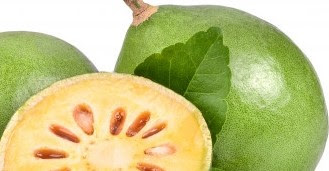
The pulp of bael fruit has numerous seed which are densely covered with fibrous hairs and are oblong and flat. The pulp had a bright yellow color. The color was to be brownish yellow, yellowish green and greenish yellow in different varieties of bael.

Bael pulp is commonly eaten fresh after removal of mucilaginous seed or made onto sherbet and beverages; however, it is also made into syrup and toffee. It also processed into value added products and having immense medicinal properties.

Beating the seeded pulp together with milk and sugar makes a popular drink called sherbet in India.

The pulp of the ripe fruit can also be taken with a spoon without the addition of milk or sugar. About 60 g of fruit will suffice for an adult. Ripe bael fruit is regarded as best of all laxatives.

The bael fruit pulp contains many functional and bioactive compounds such as carotenoids, phenolics, alkaloids, coumarins, flavonoids, terpenoid and other antioxidants which may protect us against chronic disease.

In addition, many researchers reported that it also contain many vitamins and minerals including Vitamin C, Vitamin A, thiamine, riboflavin, niacin, calcium and phosphorus.
Bael fruit pulp

Tuesday, October 22, 2019

Characteristics of bael fruit

Bael fruit (Aegle marmelos) is an attractive and characteristically sweet aroma fruit, native to Southeast Asia. It is known to be a good source of natural antioxidants and bioactive compounds.

The genus Aegle is one of the three monotypic general with deciduous leaves (Poncirus and Feronia are the other two) in the orange subfamily Aurantioideae.

It is known from pre-historic time and has been mentioned in the ancient system of medicinal. The fruits are good to taste containing 40 per cent TSS. All the parts of this tree including stem, bark, root, leaves and fruit at all stages of maturity have medical virtues and have been used in the indigenous medicine for a long time. The ripe fruit is of considerable medical value when it just begins to ripen. The ripe fruit is aromatic, astringent, cooling and laxative. It is grown throughout India as well as in Sri Lanka, Pakistan, Bangladesh, Burma, Thailand, and most of the Southeast Asian countries.

Bael fruit is very hardy, subtropical, deciduous tree that can thrive in various soil-climatic conditions and can tolerates alkaline soil, and is not injured by temperatures as low as -7 ° C. The fruit is usually harvested when the peel turns yellowish green and the stem separates easily from the fruit.

The peel of the fruit which is a very hard shell and green to brown in color depends on ripening stage. The appearance of yellow or orange edible pulp is like a boiled pumpkin, possesses a slightly sweet taste and a characteristic floral, terpene-like aroma, ver y fragrant and pleasantly flavored. Seeds are surrounded by slimy transparent mucilage.
Characteristics of bael fruit

Popular Posts

Selected articles

BannerFans.com